Johnny Beskow
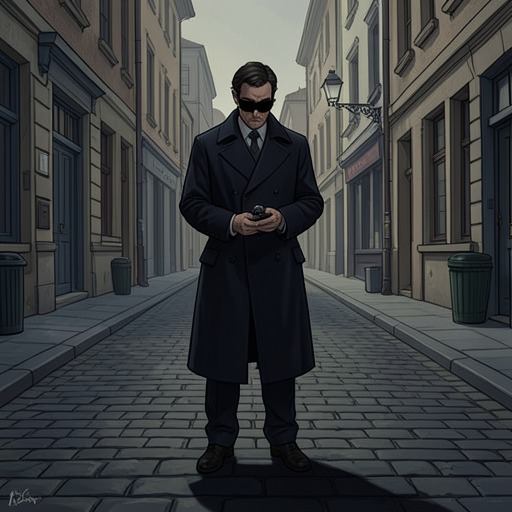
The CallerJohnny Beskow is a slight, isolated seventeen-year-old whose taste for mischief grows into a campaign of community-wide intimidation. Living amid poverty and neglect, he discovers that a phone call or letter can make strangers believe him and act on his claims; the resulting power feels intoxicating. Yet his late admission that frightening people was a game sits beside a specific denial: he insists he did not release the dogs that killed Theo Bosch.
Identity and Home
Johnny lives with his mother in a decaying, disorderly house in Askeland. He watches her sleep through the day after drinking, and the neglected surroundings—the rubbish bags, old paint buckets, rain-filled wheelbarrow, and weeds advancing toward the house—mirror a home without reliable care. His mother’s drinking is not occasional in his account: she may be drunk by eleven in the morning, and he remembers finding her drinking vodka at seven. By evening, she sometimes resumes the outward role of a parent, asking where he has been and whether he has found work.
The household is poor. His mother receives disability payments of 4,020 kroner, and Johnny receives another 1,800, alongside subsidized housing. She urges him to get a job because she cannot support him indefinitely. He resents the prospect of being ordered around and wants to remain his own master, riding his moped instead. He believes nobody wants to employ him and takes comfort in being only seventeen, too young for some work. His refusal is therefore presented alongside material hardship and a fear of subordination, not as a simple absence of need.
Johnny knows almost nothing about his father. He wonders whether his father left because of his mother’s drinking, found another partner, or raised children he considered better than Johnny. The unanswered questions sharpen his sense of being unwanted. His grandfather, Henry Beskow, has given him money for both his moped and his guinea pig, Bleeding Heart; the gifts stand out against a household where no one was available to organize Johnny’s confirmation celebration and there was no one to invite.
Mischief as Power
Johnny’s mischief supplies what his home life does not: a feeling of agency. He describes to himself the ease with which people accept what he tells them and help when he makes a call or writes a letter. He imagines that he can disrupt an entire community. At school he was called the wimp from Askeland, and he sees himself as physically unimpressive; the contrast between that label and the power he feels through deception is central to his self-image.
His red Suzuki moped gives him another kind of freedom. He rides fast, wearing a red helmet with small yellow wings, and enjoys leaving behind the smell and disorder of home. As he speeds away, he imagines people reacting with horror and indignation to the incident in Bjerketun. Their imagined attention pleases him: his mischief matters because it makes people notice and fear what has happened. He even reflects that people should not take life or anything else for granted, treating the shock he creates as a lesson imposed on others.
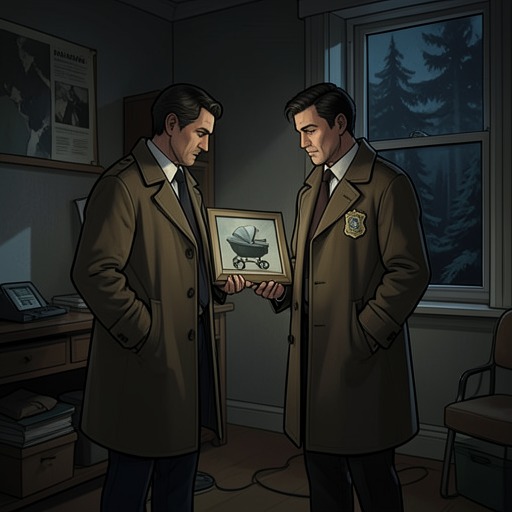
The investigation of the attack on the Sundelin household establishes how carefully such intimidation could be arranged: the perpetrator would have needed to observe the family’s routines and know when the baby slept. The investigators initially discuss several possible motives, including revenge and jealousy, rather than immediately identifying Johnny. But Johnny’s own reflection after the incident shows that he understands the effect on the family: he imagines Lily Sundelin and Karsten Sundelin keeping Margrete close, newly alert to danger, and recognizes that he has changed their sense of the world. He takes satisfaction in having made ordinary life feel unsafe.
Harm, Anger, and the Limits of His Control
At home, Johnny’s resentment is volatile. He watches his mother with contempt and imagines making her pay for pushing him too far. When he finds cooking oil in the refrigerator, he considers using it to burn her, reasoning that it would hurt longer than water. The thought is not described as an act carried out, but it reveals how his anger turns humiliation and disgust into fantasies of retaliation. His mother’s soberness can also unsettle their usual arrangement: he says he hates her drinking, yet when she is sober he feels she takes control and confronts him with force.
The death of Bleeding Heart breaks through his practiced toughness. When his mother says the guinea pig got loose and could not be allowed to endanger the house, Johnny trembles and shouts that the animal could not have escaped its latched cage. He accuses her of taking it and demands to know where it is. The loss exposes a bond and a capacity for grief that his self-presentation as a fearless troublemaker conceals. The pet had been a rare possession of his own, housed in a cage bought with money from Henry.
Johnny’s anger also enters the world beyond the house in the form of physical threat. On the Love Trail, he sees a lone cyclist and associates her with the security of having a father to turn to when life falls apart. Carrying his army knife, he crawls out from the undergrowth and prepares to rush her from behind, counting down as he readies himself. The scene connects his private grievance to a deliberate attack on someone vulnerable and alone; his excitement makes him tremble, and anger steadies him. The episode shows the danger in his habit of converting resentment into action, rather than treating his deprivation as an excuse for what he does.
Bonds and Conflicting Loyalties
Johnny’s bond with Henry is one of the few relationships he describes as sustaining. Sitting beside his sleeping grandfather in a hot, stuffy lounge, he thinks of the practical routines that bind them: making a sandwich, swatting a fly, fetching the post, and talking. He wonders where he will go and whom he will help when Henry is gone. The contrast is stark: Johnny can feel indifferent to life and consequences while still caring deeply about the old man whose home offers him a place to think clearly.
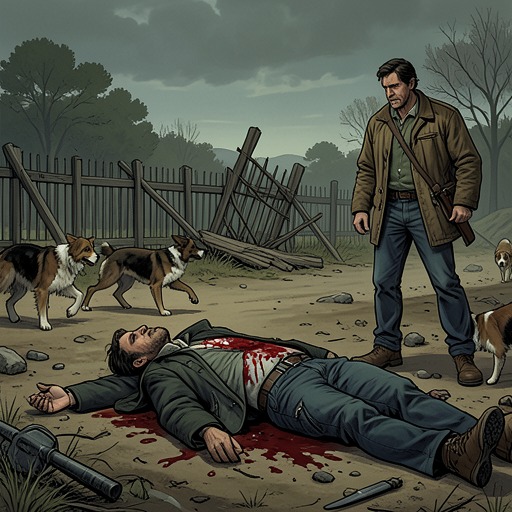
That attachment complicates the way Johnny understands responsibility. When Henry discusses the fatal release of Schillinger’s dogs, he condemns the unknown prankster and says the person responsible may be guilty of negligent homicide, whether or not the community has caught him. Johnny becomes restless as he listens. Later, when Sejer confronts him, Johnny suggests that his mother brought food to the old man, then tells the inspector he can question him and that he will admit to frightening people. But he firmly denies going to Schillinger’s property or letting the dogs out. His confession to the hoaxes therefore does not settle his responsibility for Theo Bosch’s death.
Admission and Consequences
After Johnny is appointed a defence lawyer, his status as a minor means he cannot be held in custody. He must report to the police station three times a week and arrives on time each time. After checking in, he goes to Sejer’s office, where they talk over mineral water. This repeated arrangement shifts their contact from investigation toward an uneasy, structured conversation: Johnny lays out what he has done, while Sejer makes the harm explicit.
Johnny admits that he enjoyed frightening people, but calls the campaign a game and says he never meant to hurt anyone. Sejer counters that people were hurt badly and perhaps for life, whether or not Johnny can yet understand the consequences. Asked about life with his mother in Askeland, Johnny grows morose and says she is never sober and takes it out on him. The exchange places his account of neglect beside his responsibility for causing fear without collapsing one into the other.
Johnny’s defining contradiction remains unresolved. He is a neglected boy who longs for attention, resents dependence, and finds a sense of command in deceiving strangers; he is also capable of attachment to Henry and distress at losing Bleeding Heart. His punctual reporting and willingness to discuss his pranks mark a change in how he faces the investigation, but they do not erase the damage he admits causing or answer the allegation he continues to deny. The novel makes the gap between intention and consequence central to his character: for Johnny, terror could be a game; for the people forced to live through it, it was not.